Wednesday, November 1, 2017

Mark Your Calendar! Event November 14th

Parent Class and Kids' Game Night


GPS Parent University and the Gifted Education Parent Council (GEPC) 
are partnering for this event: 

Presents:

The Vibrant Social and Emotional Life of a Gifted Child

Val Vista Lakes Elementary Library
November 14, 2017
5:30 - 7:30 pm

The social and emotional development of gifted children can be like a roller coaster ride!  This discussion will focus on how the nature and traits of giftedness impinge on the normal affective development of these students.  We will explore ways both parents and students can better manage the ups and downs of growing up gifted.

Register for the Parent University class here:   

Attention Kids in Grades K - 8
While your adults participate in the lecture, come meet new friends and enjoy a fun game night! Please bring your water bottle, snack for yourself, and favorite non-electronic game (such as: board game, card game, K’nex, Legos, chess, checkers, etc.). High School Student Volunteers will assist with game night. Kids meet in the Val Vista Lakes Elementary Multipurpose Room at 5:15 pm. 
Sponsored by:

Questions?  Contact:  giftededucationparentcouncil@gmail.com
 Together we can ensure that every GPS gifted student has the opportunity to learn and grow.

Monday, October 30, 2017

Update: Junior High Gifted Talented & Creative Program

2017 Fall GTC Newsletter


After two years in the pilot phase, the GTC program was fully launched fall of 2017 at Highland Junior High.  The full launch was approved by the GPS school board spring of 2017.

The 2017 fall newsletter includes a description of the program, an introduction to the GTC teachers as well as students' perspective of the program.

We wish to thank the district teachers, staff and committee members who helped make the GTC a reality!  We wish to thank the GPS School Board for their support of gifted education in our district.

Click here to view the 2017 Fall GTC Newsletter.

Click here to visit the GTC informational page on the district website.

Wednesday, October 25, 2017

Preparing for Parent Teacher Conferences: Part 4

Understanding the Visual-Spatial Learner

By Stephanie Newitt


What is a Visual-Spatial Learner?

"Creative, curious, out-of-the-box thinkers, visual-spatial learners (VSLs) learn by intuitive leaps. They remember what they see and forget what they hear. They may forget details but remember the BIG PICTURE forever."

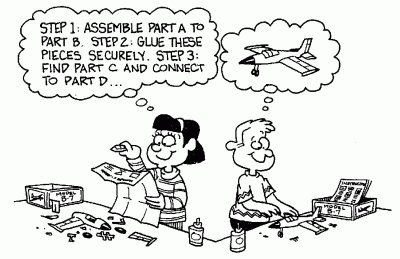
Did your child score high in the "non-verbal" area of a gifted identification test? Are you wondering what "non-verbal" even means? "Non-verbal" is a phrase coined by testing companies which refers to the sub-test that contains picture puzzles with no verbal instructions. This test area identifies individuals who thinks with the big picture in mind, who prefer to move from "whole to part" as opposed to "part to whole." Individuals with this learning style can feel frustrated in an audio-sequential learning environment in which sequential steps are given verbally with little to no reference to what the end product is to look like. These are visual-spatial learners.

Qualifying as gifted in the "non-verbal" area is different from other areas. Other testing areas may be directly connected to an academic subject, but being identified as gifted in the "non-verbal" area reflects the student's learning style, not a specific academic subject, though the VS learning style can help them be successful in various subjects and cause frustration in others.


Preparing for Parent-Teacher Conferences

Prior to your PT conference, review your child's gifted assessment scores.  GPS uses the Cognitive Abilities Test (CogAT) for gifted assessment.  If your child has been identified as gifted in the "non-verbal" area, and is struggling in an academic subject, you may wish to discuss with your child's teacher your child's need to learn from whole to part, such as to view a sample finished project when a project is assigned.  Ask what strategies and resources are available in the classroom/district to support VS learners.  If your child is excelling in an academic area, thank the teacher for supporting the VS learning style in his/her classroom.

For more information on Visual-Spatial Learners, click here to visit the VS Learner page of our website.

Source: Silverman, Linda K. “Vivid Imagination.” Visual-Spatial Resource, www.visualspatial.org/.

This concludes our four-part series on "Preparing for Parent Teacher Conferences." If you found any of this information helpful, we would like to hear from you. Please email us your thoughts at gilbertgifted@gmail.com. Thank you.

Stephanie Newitt is a co-founder of Gilbert Supporters of the Gifted and a member of the GPS Gifted Education Parent Council Executive Committee. She has a B.S. in Family Science and is the mother of four gifted children, ages 14-24.

Tuesday, October 24, 2017

Preparing for Parent-Teacher Conferences: Part 3

Emotional Intelligence

By Stephanie Newitt

Emotional Intelligence is defined as the capacity to be aware of, control, and express one's emotions, and to handle interpersonal relationships judiciously and empathetically.  It is the key to both personal and professional success.

Helping your child develop "emotional intelligence" is an important journey on which to embark.  Emotions of the gifted are often deep and poignant and therefore can be difficult for the individual to identify and process.  Helping your child learn to identify their emotions is the first step, and using an emoticon sheet similar to this one, can help them label their emotion. 


Dimensions of Emotional Intelligence

Emotional intelligence is made up of the following:
1.     Knowing one's emotions
2.     Self-awareness, or the ability to recognize a feeling as it happens, is the cornerstone of emotional intelligence. Being aware of our moods, thoughts, and feelings about our moods is necessary to manage emotions.
3.     Managing emotions
4.     Managing feelings so that they lead to appropriate behavior is a critical ability that builds on self-awareness.
5.     Motivating oneself
6.     Enthusiasm and persistence in the face of anxiety, fear, and setbacks set achievers apart. Believing that you possess the will and the way to master events is a critical predictor of success in school and life.
7.     Recognizing emotion in others
8.     Empathy builds on self-awareness and applies it to others. It is a fundamental skill that is essential to successful interpersonal interactions.
9.     Handling relationships
10. The art of relationships is, in large part, measured by how well we can manage the emotions of others, and how well we are able to recognize and respond to those emotions with appropriate behavior.​

Emotions are a natural part of being human and are part of our everyday experiences.  Helping our gifted children first label their emotion and then understand that their emotions are natural is important, especially since the emotions of the gifted are often felt very deeply.  This lets them know they are in a safe place to identify and process their deep emotions.  They can then be better guided on appropriate expressions of those emotions.​

Preparing for Parent Teacher Conferences

If you feel the need to discuss with your child's teacher your child's emotional intelligence, you may wish to discuss pragmatic emotional labeling, a safe place for them to process their deep emotions, and the need for your child to receive encouragement on this journey. 

Parent Modeling of Emotional Intelligence

Some tips for parents from an article on EQ from the Mom Agenda website:
1.  Encourage ‘I’ statements.  Encourage the habit of expressing what you feel instead of what’s wrong (or right) with a situation. For example, “I feel mad when you say mean words like that,” or “I feel happy inside when you share with me.” 
2.  Know ahead of time what to say during an emotional display.  Many parents “shoot from the hip” when trying to calm down an emotional toddler. There is a great sense of satisfaction that comes from knowing at least how to start coaching your child through his strong expressions of emotions before they occur.  And, most importantly, you are more able to control your own emotional reactivity and teach effectively.
3.  Model appropriate EQ skills yourself.  Children are always watching their parent’s emotional reactions in everyday situations. In many ways, children mirror our own behavior. Therefore, start identifying your own feelings, and be aware of how you manage them. If you’re angry and yelling, chances are you’ll find your child yelling too! Remember, “School is never out at home.”


Sources:
  1. Zernzach, Randall. “What You Need To Know About Your Child's EQ (Emotional Intelligence).” MomAgenda, Day Planners, www.momagenda.com/child-eq/.
  2. “Cultivating Emotional Intelligence.” Bright Horizons Family Solutions, www.brighthorizons.com/family-resources/e-family-news/2010-roots-of-success-cultivating-emotional-intelligence.


Part 4:  Understanding Visual-Spatial Learners


Stephanie Newitt is a co-founder of Gilbert Supporters of the Gifted and a member of the GPS Gifted Education Parent Council Executive Committee.  She has a B.S. in Family Science and is the mother of four gifted children, ages 14-24.

Sunday, October 22, 2017

Preparing for Parent Teacher conferences: Part 2

Tools to Articulate the Needs of the Gifted Child


By Stephanie Newitt

Before we can articulate the needs of gifted children, we must first understand their characteristics and intensities as they relate to giftedness.  Below you will find simple parent worksheets to aid in this process. Print and complete the worksheets while thinking of your gifted child.  This process will not only give you insight to better understand your gifted child, but will provide vocabulary for you to use when describing your gifted child to family members, teachers, doctors, mental health practitioners, etc..   


Click on the links below:
  
This form lists common characteristics of both bright and gifted children, allowing parents to compare and contrast these characteristics as they apply to their particular child.

If your child identifies with more than half of these characteristics, you have learned that giftedness comes with its own set of strengths and challenges. Being gifted is not easy. The more their strengths and challenges are both understood and serviced, the more likely it is for gifted children to lead successful lives.

The purpose of this form is two-fold. First, to increase awareness that giftedness impacts not only intellectual development, but also psychological and nervous system development. Second, to inform parents, teachers and caregivers that responsive behaviors to the overexcitabilities listed therein are typical for gifted children. Gifted children, therefore, will need to be taught in such a way that their overexcitabilities are taken into account and their emotional and social growth is fostered.


Preparing for Parent Teacher Conferences


Feel free to bring a copy of these completed worksheets to your Parent-Teacher conference.  These will assist in forming a common base for discussion about the strengths and needs of your child.  It may be beneficial to leave a copy of the completed worksheets with your child’s teacher.

As parents we do not know the scope or the limits to the resources that teachers have available to them.  As you articulate the genuine needs of your child for them to grow, be sensitive to the teacher by asking the open-ended question, "What resources are available to meet these needs?"  Give them time, even days, to research this as needed.

GPS Gifted Education Parent Council

If you have not yet connected with your school’s representative on the GPS Gifted Education Parent Council, please do so.  They will be aware of additional resources and opportunities that may be of interest to you.  You are not alone in this gifted journey.

Part 3:  Emotional Intelligence
Part 4:  Understanding Visual-Spatial Learners

Stephanie Newitt is a co-founder of Gilbert Supporters of the Gifted and a member of the GPS Gifted Education Parent Council Executive Committee.  She has a B.S. in Family Science and is the mother of four gifted children, ages 14-24.


Wednesday, October 18, 2017

ASU Outreach: Physics Day for High School Juniors & Seniors!

·  There is a flyer here: ASU Physics High School Outreach
·  Students can sign up to attend here: https://meetasuphysics2017.eventbrite.com
·  If a passcode is needed to get into eventbrite, that code is: FuturePhysicsSunDevil

Preparing for Parent-Teacher Conferences: Part 1 of a 4 part series

Understanding the Asynchronous Development of the Gifted Child

By Stephanie Newitt

Parent-Teacher Conferences are one week away in Gilbert Public Schools.  These experiences are designed to be focused on discussing both the strengths and challenges of the child as well as goals to promote the child's growth and development.  How can a parent of a gifted child prepare for these conferences with giftedness in mind?

One of the key points to understand in the growth and development of a gifted child is asynchrony.  The National Association for Gifted Children (NAGC) describes asynchronous development as follows:

Asynchrony is the term used to describe the mismatch between cognitive, emotional, and physical development of gifted individuals. Gifted children often have significant variations within themselves and develop unevenly across skill levels. For example, a gifted child may be excellent in math, but poor in reading--or vice versa. Often, intellectual skills are quite advanced, but fine motor or social skills are lagging. Experts do not completely agree, but because asynchrony is so prominent in gifted children, some professionals believe asynchronous development rather than potential or ability, is the defining characteristic of giftedness.

Below are graphics that depict the contrast between typical and asynchronous development.


If you have ever looked at your intelligent child and wondered, exasperated, "What were you thinking?!?"  then you have experienced an aspect of your child's asynchrony.   It is common for adults to expect gifted children to do or feel what is greater than their natural capacity; however, would we want others to expect perfection of us on our first attempt?  Our second?  No.  This would be extremely frustrating and would likely cause some anxiety.  

Realizing that our gifted children have strengths and challenges respects them both as a child and as a human being.  We should both support their strengths and areas of giftedness as well as provide support for their areas of weakness.  Gifted children may have knowledge about certain subjects, but they lack wisdom.  Wisdom is gained through life experience. Parents and teachers can mentor gifted children as these children gain experience by doing the following:
  • Create an emotionally and physically safe environment in which the gifted child can take risks and fail.
  • Create a family or classroom culture that FAIL means "First Attempt in Learning."
  • Coach the gifted child through failure, encouraging him/her to discuss and explore how he/she could handle the situation differently next time.
  • Praise for effort more than outcome.

As the adults closest to the gifted child realize that asynchrony is a normal part of growing up gifted and provide strategies of support, the gifted child is more likely to develop the skills necessary to be successful in life.


Preparing for Parent Teacher Conferences

As you see areas of asynchrony in your gifted child, discuss these with your child's teacher.  Share that you understand that asynchrony is typical in the development of the gifted child and ask what supports are available to support your child's growth in their areas of deficit.

Part 2:  Tools to Articulate the Needs of the Gifted Child
Part 3:  Emotional Intelligence
Part 4:  Understanding the Visual-Spatial Learner


Source:  “Asynchronous Development.” Asynchronous Development | National Association for Gifted Children, www.nagc.org/resources-publications/resources/social-emotional-issues/asynchronous-development. Accessed 3 Oct. 2017.

Graphics created by Stephanie Newitt

Stephanie Newitt is a co-founder of Gilbert Supporters of the Gifted and a member of the GPS Gifted Education Parent Council Executive Committee.  She has a B.S. in Family Sciences and is the mother of four gifted children, ages 14-24.